15 Jun 2026
Unpacking how interface animations synchronize with reel cycles to influence session pacing in digital gambling environments
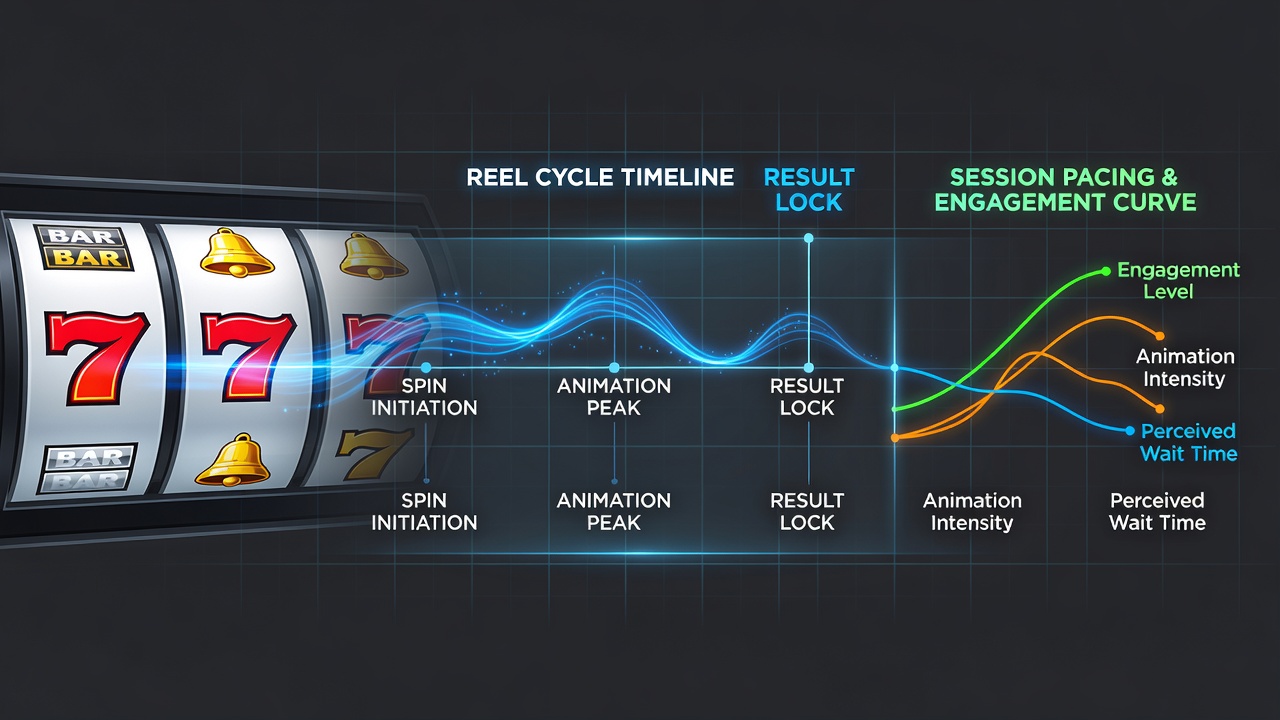
Interface animations in digital gambling platforms align with reel cycle timings through precise frame-rate controls and transition delays that match the duration of symbol rotations. Reel cycles themselves consist of randomized stop sequences generated by random number generators while visual layers overlay smooth easing functions and particle effects to create continuity between spins. This synchronization occurs at the code level where animation timelines trigger immediately after each reel halt and extend through win evaluation phases to maintain visual flow without introducing artificial pauses.
Core synchronization mechanisms
Developers calibrate animation durations to reel spin intervals so that symbol movements complete in exact coordination with backend outcome calculations. When a reel cycle finishes its random selection process the interface activates layered transitions that include symbol highlights, light bursts, and meter updates all timed to occupy consistent milliseconds across sessions. Research from gaming software providers indicates these alignments prevent visual stuttering that could otherwise disrupt perceived momentum and cause players to adjust their interaction rhythms.
Multiple animation tracks run in parallel during each cycle including background motion elements and foreground win indicators that activate only after reel stops. Observers note that when these tracks share a common clock they produce seamless pacing where one spin's conclusion feeds directly into the next cycle's initiation without gaps or overlaps that break concentration. Data from platform analytics shows this method keeps average session intervals stable across varying network conditions because the animation engine compensates for minor latency variations by adjusting transition speeds on the client side.
Influence on session pacing patterns
Reel cycle lengths combined with animation overlays determine how quickly users progress through sequences of spins and decisions. Shorter cycles paired with rapid win animations accelerate the rate of play while extended symbol cascades accompanied by prolonged particle displays extend the time between user inputs. Studies of player behavior logs reveal that synchronized systems tend to cluster spins into rhythmic groups where animation completion signals the next available action point creating predictable intervals that users internalize over repeated sessions.
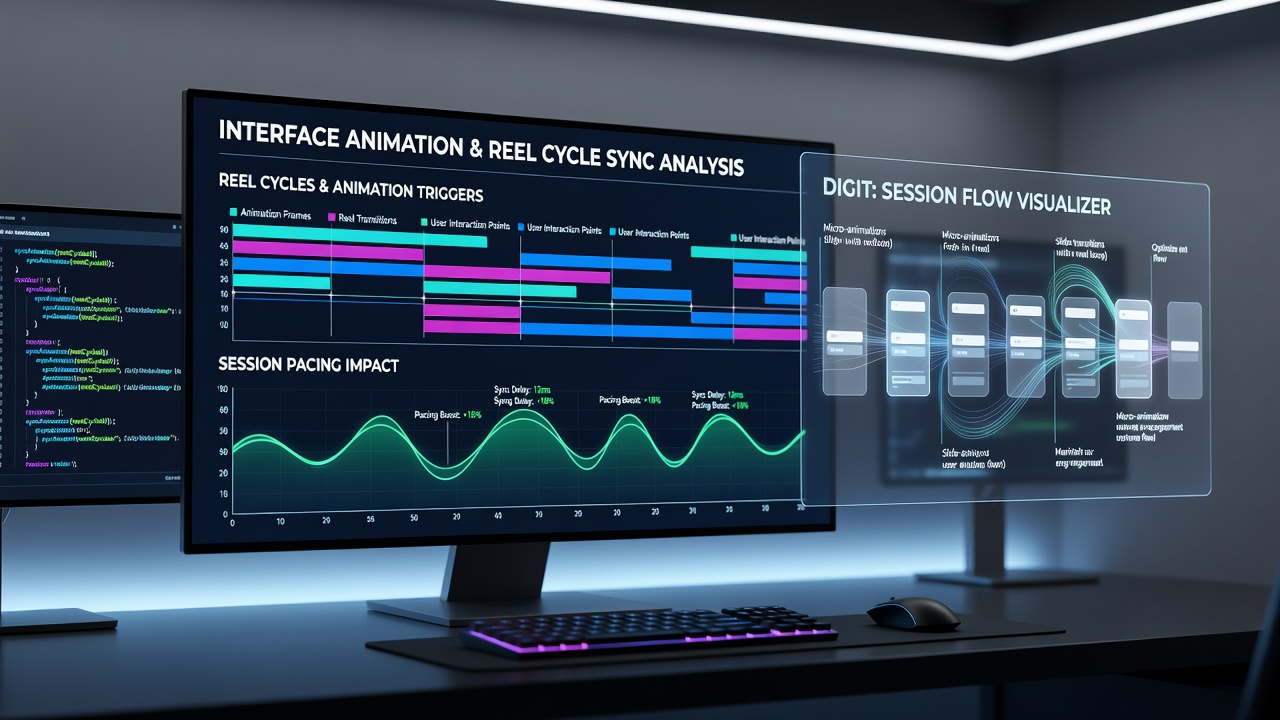
Session pacing also shifts when bonus triggers insert additional animation sequences that extend beyond standard reel cycles. These inserted segments recalibrate the overall tempo by introducing new timing layers such as expanding wild movements or multiplier buildups that occupy fixed durations before returning control to the base game loop. Figures from operator dashboards indicate that platforms using tightly synchronized animations maintain consistent daily active user intervals whereas unsynchronized designs show greater variance in session length as players react to erratic visual feedback.
Technical considerations in 2026 implementations
As of June 2026 several platforms updated their animation engines to incorporate adaptive synchronization that responds to individual device performance metrics. These updates allow reel cycle timings to stretch or compress slightly while animation frames interpolate smoothly to preserve visual coherence across high and low refresh rate screens. Reports compiled by the Pennsylvania Gaming Control Board document how these adaptations correlate with steadier engagement metrics in regulated markets where session data undergoes regular review.
Engineers achieve this adaptability through modular animation scripts that reference the same random seed used for reel outcomes ensuring that visual events remain deterministic relative to each cycle. The result appears in user interfaces as continuous motion where symbol landings trigger immediate follow-through effects without requiring separate timing buffers. Industry analyses note that such designs reduce the occurrence of perceived delays that previously prompted players to alter bet sizes or exit sessions prematurely.
Observed patterns across device types
Mobile implementations face additional constraints because variable touch response times interact with animation synchronization to affect overall pacing. Developers therefore embed device-specific calibration routines that measure input latency and adjust reel cycle start offsets accordingly so the combined experience remains uniform. Desktop environments on the other hand allow longer animation windows that can incorporate more detailed particle systems without impacting perceived speed because hardware resources support higher frame counts.
Cross-device testing data indicates that synchronized interfaces produce similar average spins per minute regardless of platform once calibration completes. This consistency supports stable session pacing across user bases segmented by hardware while still permitting operators to tune baseline cycle speeds through backend configuration parameters.
Conclusion
Synchronization between interface animations and reel cycles establishes measurable control over session pacing by dictating the intervals between user actions and visual feedback points. Technical implementations rely on shared timing references and adaptive interpolation to maintain coherence across varying conditions. Data collected through regulatory channels and platform analytics continues to map these relationships as systems evolve through mid-2026 updates.